 |
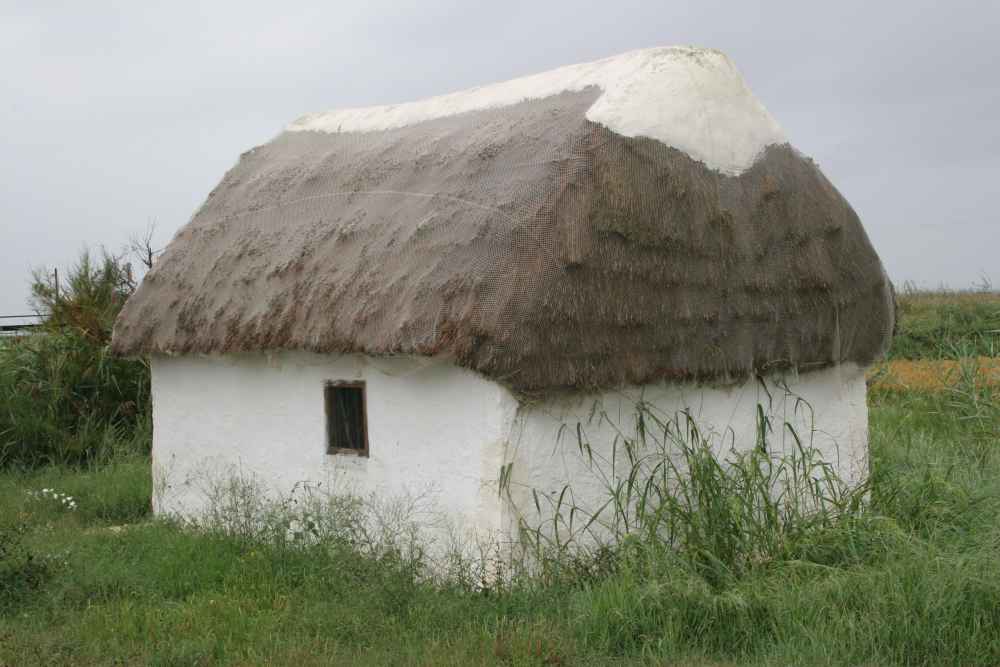
| Traditional cottage. Source: Wikimedia Commons |

Monday, 17 February 2014
Where to go birding: the Ebro Delta



Saturday, 1 February 2014
5 reasons to protect wetlands
 |
| Las Tablas de Daimiel. Photo taken by Yannboix |
Tuesday, 21 January 2014
Austrian insects (II): butterflies and moths
 | ||||
| Lycaenidae on Lotus corniculatus Those are always the most difficult to identify. |
For a few months I was stalking diurnal butterflies in the amazing land of Tyrol (Austria). Although I was focused on butterflies, it was impossible not to see the huge diversity of other kind of insects and arthropods I found, which I tried to take as many pictures as possible. In the first part of this series, I talked about beetles.
On this second part of the Austrian insects series I will show you some of the butterflies and moths I spotted, many of them very impressive. I probably had seen them before, but never paid attention. Now, when I'm in the nature hiking or birdwatching I always keep an eye to the grass to see if I can spot some bug.
Pictures were taken in grasslands and meadows, so most of the species are related to this kind of habitat. My photography gear consists in a Canon Ixus 95 IS, so you can't make a silk purse out of a sow's ear (I love idioms in other languages). I'm very happy of the quality of some pictures, but some others are quite low. I hope you enjoy the gallery anyway. I couldn't take a picture to all of the species I spotted because that wasn't my
job, and... many weren't quiet enough!
Thursday, 16 January 2014
The Big Year

Last Saturday I participated in the Annual Winter Bird Census as the last years, in Els Muntanyans, the natural beach of my town. There, I met several ornithologists experts, who talked me about the American competition "Big Year" and the true story film related to this competition: "The Big Year".
A Big Year is a competition among birders, with the aim to see as many birds as possible in a calendar year. Far to be a cinephile blog, I will only say that the film (2011) is a comedy about three birders who compete to beat the record of one of them. I think it's a good comedy and worth watching, and although (of course) a little bit exaggerated, many birders will feel themselves identified with these characters.
After the film, this competition started to be more famous worldwide, and now there are many Big Years around the world. Although I don't consider myself ready to compete at this level, I thought that it'd be interesting to write down all the species I can see in a year. Then I'll compete only with myself, and I'll learn to identify many species.
You can find my progress here: Bird List 2014
Wednesday, 6 November 2013
Another chance failed to protect the Antarctic Ocean
 It seems that currently both poles are on news. First, the 30 Greenpeace activists taken by Russian forces when they were protesting on Shell oil drilling. Now the focus has changed to the South Pole. Last week, 25 bodies (24 countries + EU) have met in Hubart (Australia) to discuss the future of the Antarctica and several possible Marine Protected Areas (MPA). As always, there are two opposite positions that threaten a possible agreement. Let's see who they are and what finally happened.
Tuesday, 29 October 2013
Austrian insects (I): beetles
 |
| Gastrophysa viridula |
A few months ago, I had the opportunity to go to Austria to study the diurnal butterfly diversity. I spent several hours doing field work, going to meadows and grasslands, observing these winged bugs. I was focused on identify butterflies, however, I could not ignore the amount of other insects there were (some of them quite annoying, by the way).
I would like to share with you, some of the pictures I could take to this spectacular wildlife. To avoid upload all the pictures in one post, I will split them in several posts. So, this one is the first of a series of posts about the insects I found in Austria. First, I will show you beetles, bees, butterflies and others insects I found on the field. After that, I will upload pictures of bugs I found in my bedroom! My window was quite big, and front of it there were a few gardens and trees that pushed several insects to come to my room.
Sunday, 13 October 2013
Why the Arctic is so important?
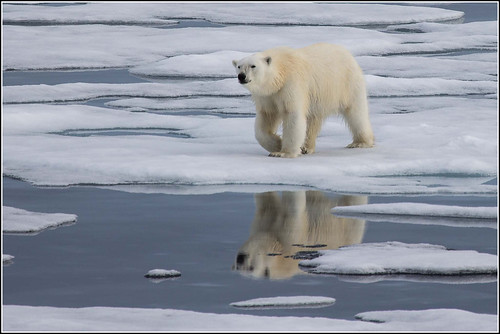
What they claim is the environmental catastrophe that an oil spill could cause in a such sensible place as the Arctic, specially for the biodiversity that live there. But I would dare say, that this problem is nothing in comparison to loss the ice permanently. Will have consequences to the climate, the permanent loss of the ice? How many species need the ice to live? Someone once suggested that we could move Polar Bears to Antarctica. I'm sure Penguins would be happy to have new neighbours.
Subscribe to:
Posts (Atom)