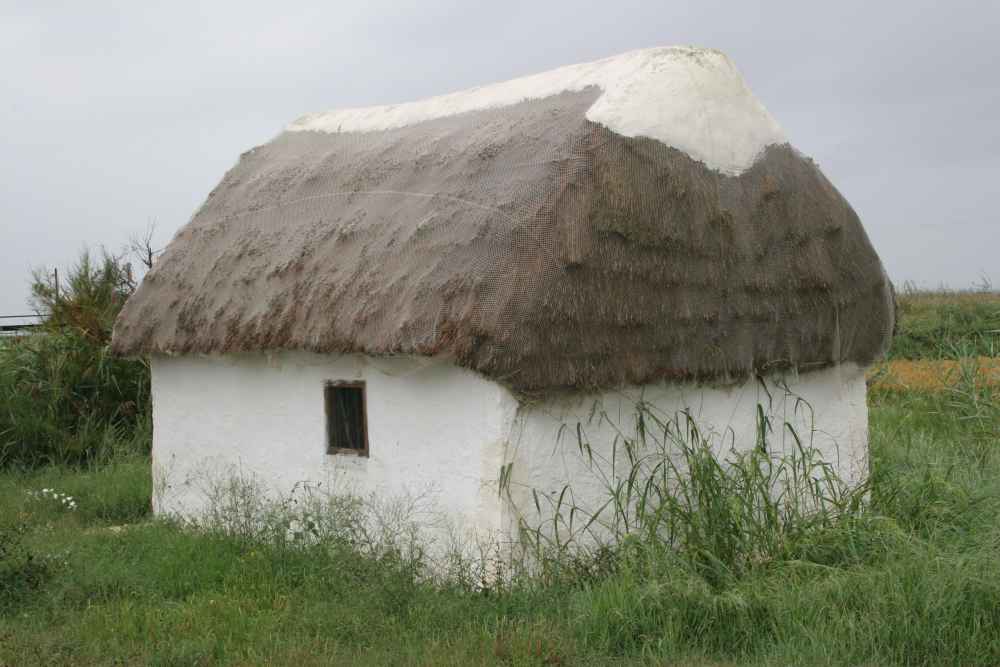
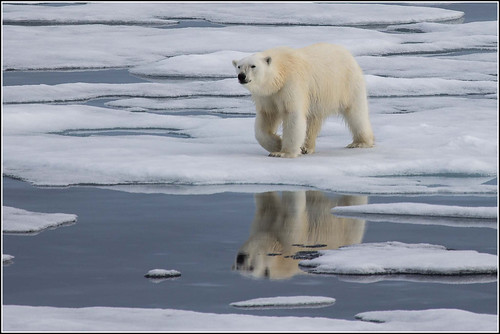
Is this all related? Or it is just a coincidence? Although there have been several climate changes along the Earth's history, this one is not natural. It is the Climate Change caused by humans, and leading quickly towards a warmer Earth. You might already know the (quite) catastrophic consequences, but do you know how does it work?
In many ways, the European Union has been a big umbrella for the environment, a point where there is a big consensus about the usefulness of the institution. Whereas many states members had a dim legislation regarding the protection of the environment, European Directives, such as the Birds and Habitats ones, pushed them towards a more protective law (although those directives could be better applied). But after the last elections to the European Parliament and the new composition of the European Commission (the EU executive body) that might change.
Since a few months ago I'm living in the wonderful city of Reading, located in the south-east of England. When I arrived, I noticed many different things comparing with my hometown in Catalonia. British people drive on the left, and use strange coins with an old lady printed on them, but that's common knowledge. It was also amazing the amount of people from so different countries and ethnicities that you could make a perfect scale of tonalities of skin colour. And it also seemed that I travelled in time, two months back, regarding the weather.
But I want to focus on another topic. If you look up at the sky, you will see planes going to Heathrow Airport at almost any time of the day. But as often as planes, you can spot Red Kites soaring! First I thought I was lucky to see them, but after a while I noticed it was quite usual to see them, even over the city. There was even one which used to fly over my home every now and then. All of this was fascinating, as I've hardly seen Red Kites before.
I would like to initiate a series of posts about places I like to go birding as often as possible. I will start with a big one. Last Saturday I had the opportunity to go to the one of the most important wetlands in Europe: the Ebro Delta. This huge wetland lies in north-east Spain, in the Mediterranean Sea and is shelter for many many birds, including some sensitive species. You can imagine what kind of paradise it is for many birders of the region (me included). However, it has also some threats that endanger not only the wildlife but the delta itself: invasive species, sea level rise and the Popular Party.
It was 2nd February, 43 years ago, in the city of Ramsar (Iran) where the Ramsar Convention was signed. It has only one main aim, but crucial: the protection of wetlands worldwide. Since 1977, 2nd February became the World Wetlands Day, where a huge number of events are organised around the world, to celebrate the date and the importance of these water bodies. But, what actually are wetlands? Why should we protect them? Which are their benefits?
Lycaenidae on Lotus corniculatus
Those are always the most difficult
to identify.
For a few months I was stalking diurnal butterflies in the amazing land of Tyrol (Austria). Although I was focused on butterflies, it was impossible not to see the huge diversity of other kind of insects and arthropods I found, which I tried to take as many pictures as possible. In the first part of this series, I talked about beetles.
On this second part of the Austrian insects series I will show you some of the butterflies and moths I spotted, many of them very impressive. I probably had seen them before, but never paid attention. Now, when I'm in the nature hiking or birdwatching I always keep an eye to the grass to see if I can spot some bug.
Pictures were taken in grasslands and meadows, so most of the species are related to this kind of habitat. My photography gear consists in a Canon Ixus 95 IS, so you can't make a silk purse out of a sow's ear (I love idioms in other languages). I'm very happy of the quality of some pictures, but some others are quite low. I hope you enjoy the gallery anyway. I couldn't take a picture to all of the species I spotted because that wasn't my
job, and... many weren't quiet enough!
Last Saturday I participated in the Annual Winter Bird Census as the last years, in Els Muntanyans, the natural beach of my town. There, I met several ornithologists experts, who talked me about the American competition "Big Year" and the true story film related to this competition: "The Big Year".
A Big Year is a competition among birders, with the aim to see as many birds as possible in a calendar year. Far to be a cinephile blog, I will only say that the film (2011) is a comedy about three birders who compete to beat the record of one of them. I think it's a good comedy and worth watching, and although (of course) a little bit exaggerated, many birders will feel themselves identified with these characters.
After the film, this competition started to be more famous worldwide, and now there are many Big Years around the world. Although I don't consider myself ready to compete at this level, I thought that it'd be interesting to write down all the species I can see in a year. Then I'll compete only with myself, and I'll learn to identify many species.
It seems that currently both poles are on news. First, the 30 Greenpeace activists taken by Russian forces when they were protesting on Shell oil drilling. Now the focus has changed to the South Pole. Last week, 25 bodies (24 countries + EU) have met in Hubart (Australia) to discuss the future of the Antarctica and several possible Marine Protected Areas (MPA). As always, there are two opposite positions that threaten a possible agreement. Let's see who they are and what finally happened.
A few months ago, I had the opportunity to go to Austria to study the diurnal butterfly diversity. I spent several hours doing field work, going to meadows and grasslands, observing these winged bugs. I was focused on identify butterflies, however, I could not ignore the amount of other insects there were (some of them quite annoying, by the way).
I would like to share with you, some of the pictures I could take to this spectacular wildlife. To avoid upload all the pictures in one post, I will split them in several posts. So, this one is the first of a series of posts about the insects I found in Austria. First, I will show you beetles, bees, butterflies and others insects I found on the field. After that, I will upload pictures of bugs I found in my bedroom! My window was quite big, and front of it there were a few gardens and trees that pushed several insects to come to my room.
What they claim is the environmental catastrophe that an oil spill could cause in a such sensible place as the Arctic, specially for the biodiversity that live there. But I would dare say, that this problem is nothing in comparison to loss the ice permanently. Will have consequences to the climate, the permanent loss of the ice? How many species need the ice to live? Someone once suggested that we could move Polar Bears to Antarctica. I'm sure Penguins would be happy to have new neighbours.
Since I'm in Innsbruck I could observe different species of the family Corvidae. Species which I can't observe easily at home, so the first days I was surprised to see so many individuals of these species.
In the city itself I could see a lot of Carrion Crows (Corvus corone), they dominate the city, specially in gardens and green areas, together with Blackbirds (Turdus merula). First I thought they were Ravens (Corvus corax) but I realized that I was wrong when I saw the real Ravens on grasslands and meadows outside the city. Their size and grave calls made clear the differences.
Another species I find sometimes here is the Eurasian Jay (Garrulus glandarius), always among the trees and forests, it's very shy and I've seen it only for short times. Fortunately, it's easy to identify by its characteristic call.
The last of the species I've gotten the chance to see here is the Alpine Chough (Pyrrhocorax graculus). They are in huge groups over Seegrube, a restaurant around 1900m over the sea level, and take advantage of the tourists and hikers who feed them.
Some Alpine Choughs asking for something to eat.
But where is the Queen of Corvidae: the Magpie (Pica pica)? I've hardly seen one all these months. Which are the conditions to make Magpies advantaged in Catalonia but not in Tyrol?
Finally, as it's usually said in English, last but not least, I want to share a video to show the intelligence of this kind of birds.
Just in case you don't get what it's doing, first it tries to grab a little box inside the tube (where there is food) with a wire. I find this already quite ingenious. But it can't, so it bends the wire to make a hook! I know some humans who probably are not so clever. There are a few videos like this in YouTube, I invite you to take a glance at them.
Do you know any other video like this worth sharing?